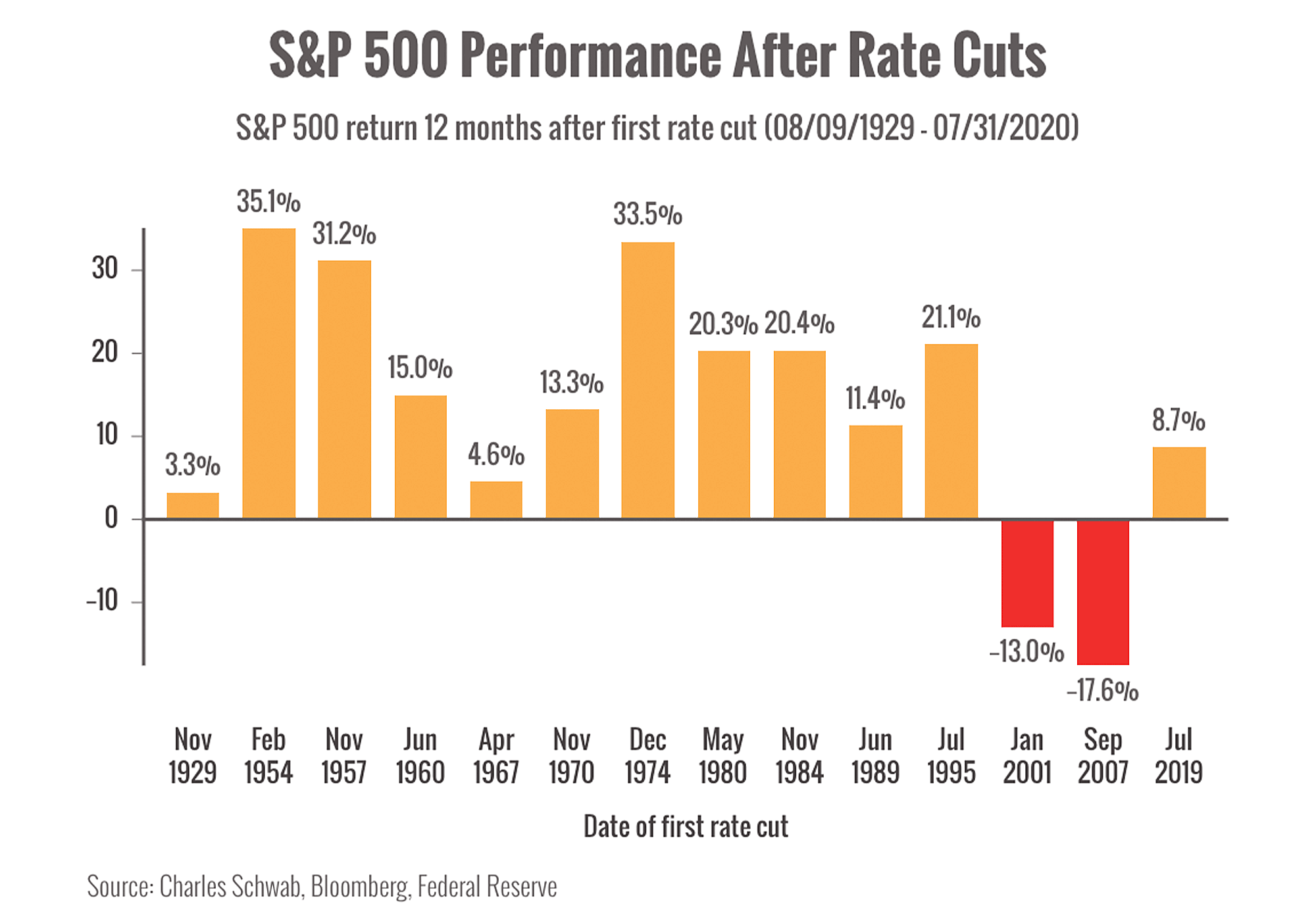
The Federal Reserve recently voted to cut interest rates, shaving 0.5% off the benchmark .1
Markets rallied exuberantly at the news, reaching new highs.2
Why did the Federal Reserve cut rates?
With inflation on a strong downward trajectory and concerns about economic weakness rising, the Fed clearly decided now was the right time to cut.
The size of the cut was a surprise to many, who expected a quarter-point cut and could indicate that the Fed feels strong action is warranted.
Some analysts believe lowering interest rates will lower the risk of a recession and increase the odds of a “soft landing” for the economy.3
What do lower rates mean? The Fed is responsible for setting the benchmark interest rate that all other borrowing rates follow. A lower benchmark will reduce borrowing costs for businesses and consumers, helping economic growth accelerate in the months to come. |
|
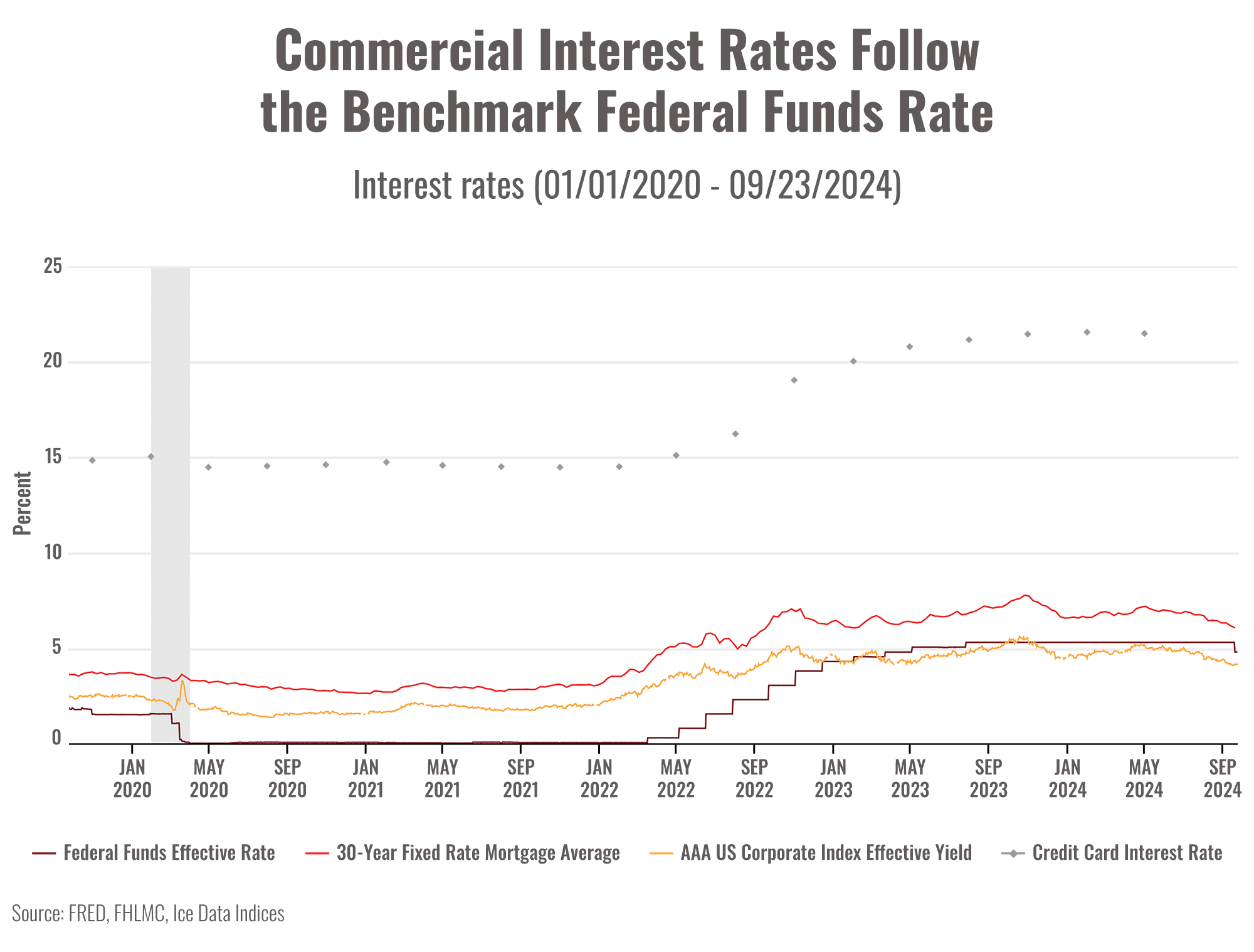
The chart above shows interest rate trends over the last four years. You can see that while commercial rates don’t change immediately after a rate cut, they generally follow the same trend. Going forward, mortgages will become cheaper, likely boosting the real estate market. Business borrowing costs will drop, giving a bump to industries like technology, which rely on credit to fund R&D. Historically, stocks have tended to do well when rates drop.4
|